
You’ve got a deadline in mind. Maybe you’ve got a product launch coming up, or you’ve just registered your business and need to go live quickly. You ask a web developer for a timeline and you get: “It depends.”
“It depends” is frustrating — but it’s also true. The honest answer is that a business website can take anywhere from two weeks to six months, and the variation comes down to factors that are completely within your control.
Let’s break down what actually drives the timeline.
Website Build Timelines by Project Type
Here is what you can realistically expect in South Africa in 2025:
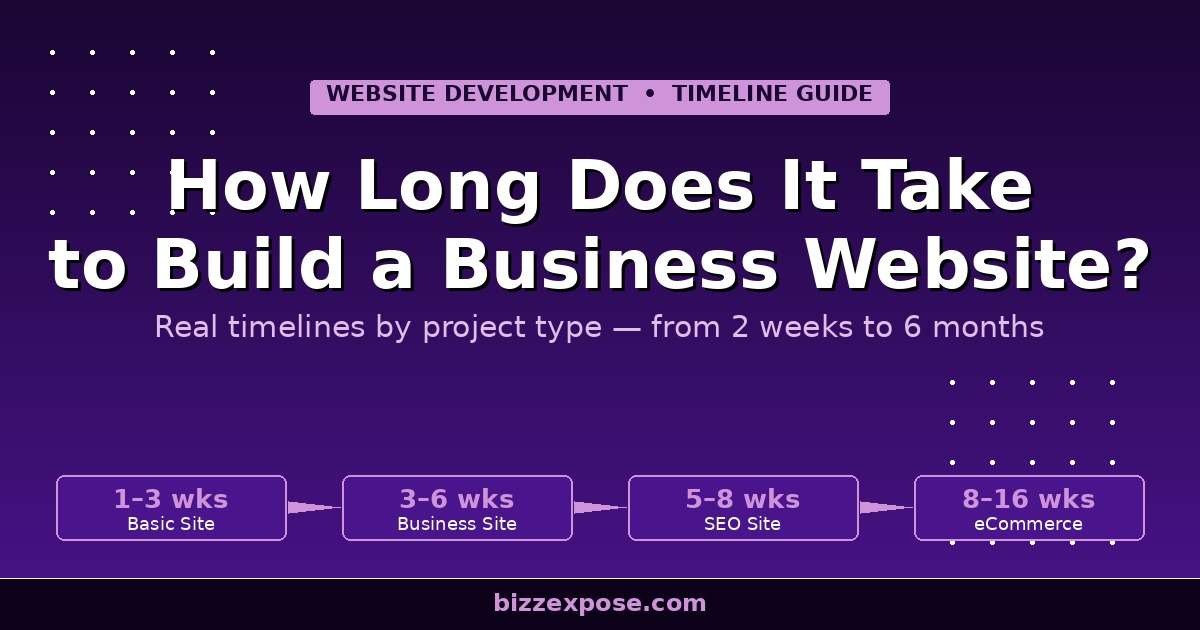
Basic Brochure Website (3–5 pages): 1–3 weeks
This is the fastest turnaround. Home, About, Services, Contact — and done. At this scope, the main delay is usually content: getting your logo, photos, and copy ready before the build starts.
Standard Business Website (5–10 pages): 3–6 weeks
More pages mean more content, more rounds of feedback, and more time for SEO setup and testing. Four weeks is typical when both parties move efficiently. Six weeks is realistic if there are delays in content approval or revision cycles.
SEO-Optimised Website: 5–8 weeks
Before writing a single line of copy, there’s keyword research, competitor analysis, and content structure to complete. Add build time, on-page SEO setup, and testing across devices, and you’re looking at six to eight weeks minimum. Rushing this defeats the purpose.
E-Commerce Website: 8–16 weeks
Product catalogues, payment gateway integration, shipping logic, mobile checkout testing — e-commerce is complex. Eight weeks is fast; twelve weeks is more realistic for a polished, full-featured store.
Custom Web Application: 3–6 months+
Booking systems, client portals, CRM integrations, and custom functionality require discovery, architecture planning, development sprints, and thorough testing. There is no shortcut.
The Phases of a Website Build (and How Long Each Takes)
Discovery and Strategy: 1–2 weeks
The developer or agency needs to understand your business, your target audience, your competitors, and what you want the website to achieve. If you’re building an SEO-focused site, keyword research and content planning happen here.
Design and Wireframing: 1–2 weeks
This is where the visual layout is designed — the structure of each page, brand colours, fonts, and image placement. Your approval at this stage is critical. Changes here are far cheaper than changes after development.
Content Preparation: 1–3 weeks (often the bottleneck)
This is the most underestimated phase. The developer cannot build your website without your content — your service descriptions, about us text, photos, and any other copy. The number one reason websites are delayed is content not being provided on time.
Development: 2–4 weeks
The actual building. Design gets coded into a functioning website, forms are set up, mobile responsiveness is tested, and the CMS is configured so you can manage updates yourself.
Review and Revisions: 1–2 weeks
You review the site, request changes, and the developer implements them. Keep this stage clean by consolidating your feedback rather than sending changes in multiple rounds.
Launch and Post-Launch Testing: 3–7 days
Final checks before going live: speed testing, SSL verification, Google Analytics setup, Search Console submission, and a full cross-device test. Then the site is launched.
What Actually Slows a Website Build Down
Most delays are not caused by the developer — they’re caused by the client. The most common causes:
- Content not being ready: logos, photos, copy, product descriptions
- Unclear brief at the start, leading to major design changes mid-build
- Multiple decision-makers who disagree on direction
- Slow feedback and approval turnaround
- Scope creep: adding features that weren’t in the original brief
The simplest way to keep your project on time is to show up prepared with your content, make decisions quickly, and consolidate feedback before sending it.
How to Speed Up Your Website Build
If you’re working against a hard deadline, here’s what you can do:
- Have your logo, brand colours, and key images ready before day one
- Write at least a rough draft of your service descriptions before the project starts
- Appoint a single point of contact for decisions — avoid committee approvals
- Agree on a revision limit upfront (2 rounds is standard) to prevent scope creep
- Use a project management tool like Trello or Asana so both parties have clear task visibility
If you’re also wondering what should go on each page of your site, see our guide on what pages every business website must have.
When You Should Not Rush a Website Build
A website built under pressure often has consequences: poorly structured SEO, weak copy, untested mobile experience, or design that doesn’t reflect your brand properly. If you launch something substandard, first impressions are difficult to undo.
If your deadline is genuinely tight, discuss a phased approach with your developer — launch the most critical pages first and build out the rest once they’re done properly.
Frequently Asked Questions
Can you build a website in a week?
A very basic website — three to five pages with minimal customisation — can be built in one to two weeks if content is ready on day one. Anything more complex requires more time to do properly.
How long does SEO take to show results after a new website launches?
Usually three to six months before you see meaningful organic traffic. Google needs time to crawl and index your pages, build trust in your domain, and rank you against competitors. This timeline improves when your on-page SEO is set up correctly from day one.
Should I wait for the website to be perfect before launching?
No. Waiting for perfection is one of the most expensive mistakes small business owners make. Launch with what’s ready, measure performance, and iterate. A live site generating 50% of its potential is better than a perfect site that doesn’t exist yet.
What happens if a developer misses the agreed launch date?
This should be covered in your agreement. Legitimate causes of delay should be communicated early. If the developer is consistently unresponsive or misses milestones without explanation, that’s a red flag.
What information do I need to provide to get my website built?
At minimum: your logo, brand colours, service descriptions, contact details, and at least a few professional photos. The more prepared you are with content, the faster the build will move.
Can I make changes to my website after it’s launched?
Yes — any website built on WordPress gives you the ability to update your own content. Your developer should train you on the basics and ensure you can log in and make simple changes without needing a developer every time.
What’s the difference between web design and web development?
Web design refers to the visual look and user experience. Web development is the technical coding that makes the design function in a browser. Most professional agencies handle both; freelancers may specialise in one or the other.
Ready to get started? Find out what’s involved in a professional build on our website design and development page.


